Introduction
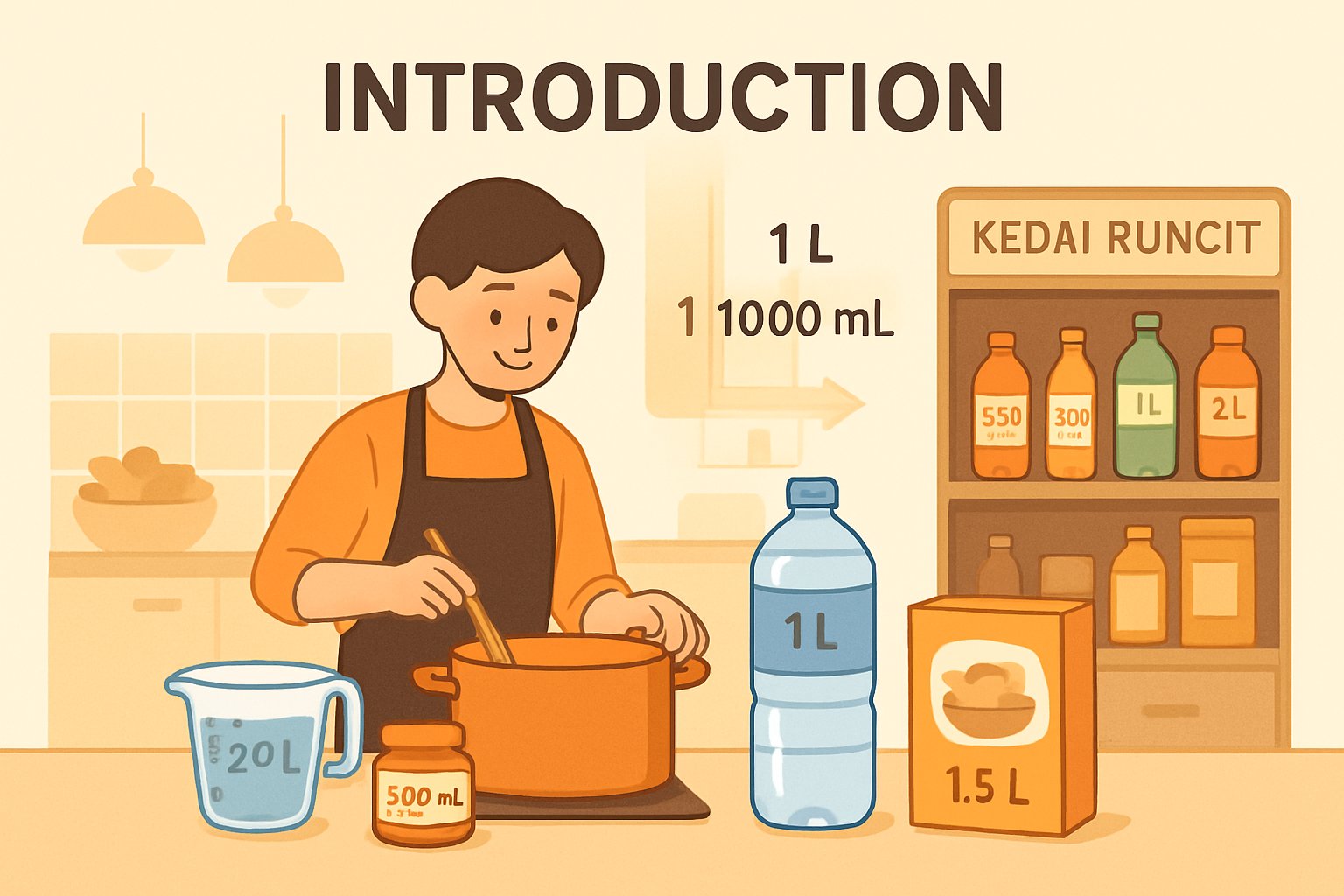
When you’re cooking at home, buying drinks at the kedai runcit, or checking product labels, you often switch between milliliters (mL) and liters (L). This quick guide explains the basics and gives you ready-to-use tables so you can convert on the spot—senang and accurate. If you prefer instant results on your phone, you can also use this ml to liters converter for speedy, mobile-first conversions.
As of 2025, the metric system remains standard in Malaysia, so knowing how to move between mL and L saves time and prevents costly mistakes—especially for F&B measurements, lab notes, or even bulk purchases where the price tag in RM ties closely to volume. Understanding these conversions can enhance your daily routines, from meal prepping to managing inventory in small businesses. With a solid grasp of the ml to liters converter process, you’ll feel more confident handling various volume-based tasks efficiently.
Understanding Milliliters to Liters Conversions
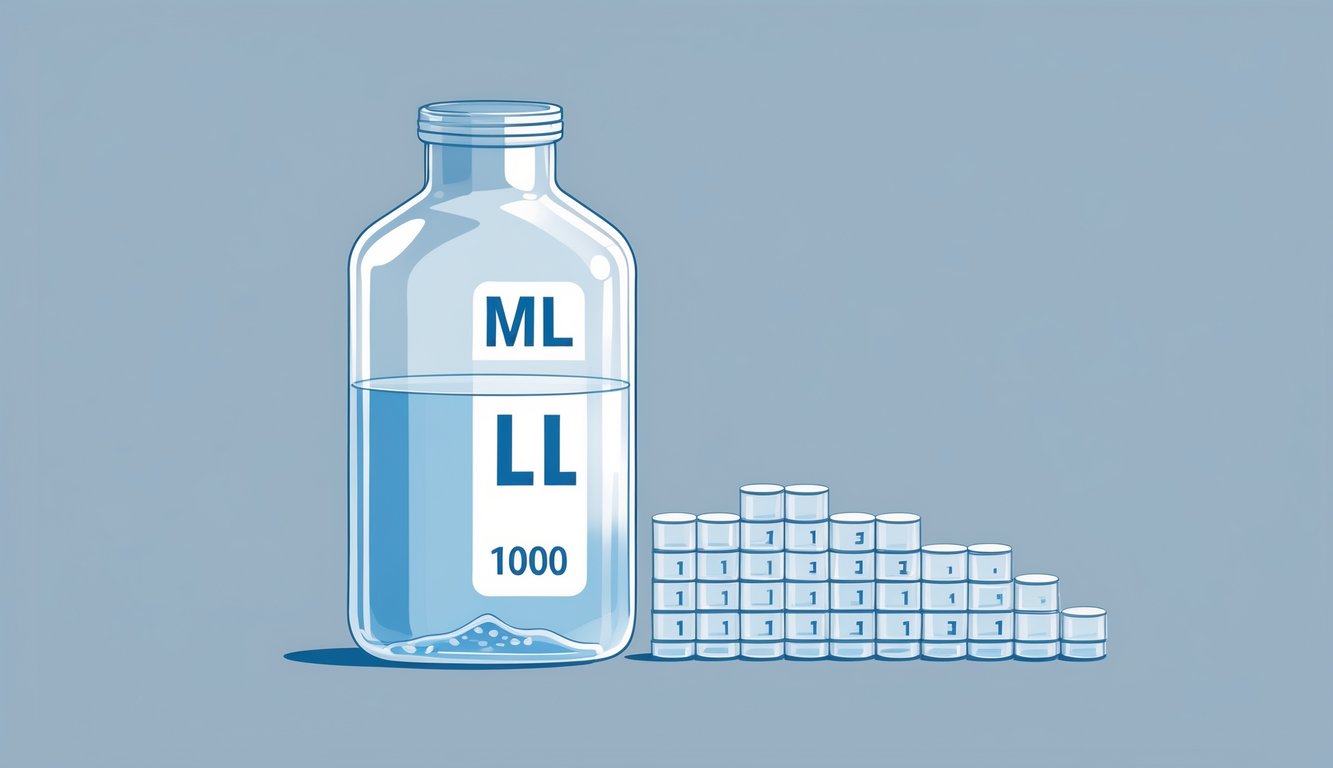
Milliliters and liters are both metric units for volume, with mL used for smaller quantities and L for larger ones. The key idea is that “milli-” means one-thousandth, so milliliters are tiny slices of a liter. Once you grasp that ratio, converting becomes a simple divide-by-1000 exercise—laju-laju done in your head or with a quick tap. This fundamental understanding forms the basis for all related calculations and helps in appreciating why these units are so widely used in everyday applications.
How many liters are there in 1 milliliter?
There are 0.001 liters in 1 milliliter. That’s because a liter is exactly 1,000 milliliters, so one milliliter is one part in a thousand of a liter. Thinking of a liter as a full bottle, 1 mL is like a single tiny drop compared to the whole. This ratio is fixed by the SI (International System of Units), so it doesn’t change with time, brand, or context.
Whether you’re measuring vanilla essence for baking or a small sample in a lab, 1 mL always equals 0.001 L. In everyday Malaysian context, this helps you read labels quickly: a 250 mL drink is 0.25 L, while a 500 mL “teh ais” cup is 0.5 L—half a liter, senang kan? Mastering this basic conversion can make shopping and cooking much more intuitive.
Milliliters to Liters conversion formula
The conversion from milliliters to liters is straightforward: liters = milliliters ÷ 1000. You divide by 1000 because there are 1000 milliliters in a liter. If you’re doing this on mobile, typing “/1000” after the mL value gives you the L value in one step. Mathematically, L = mL × 0.001 is the same thing, just expressed with a multiplier.
Use whichever version you find easier to remember. For mental math, moving the decimal point three places to the left is often the fastest trick. By locking this formula into muscle memory, you can convert in seconds at the supermarket, cafe, or while prepping your recipe at home tanpa pening. This approach not only speeds up the process but also reduces errors in practical scenarios.
Milliliters to Liters calculation example
Imagine you have a 750 mL bottle of mineral water and want to know the volume in liters. Using the formula, L = 750 ÷ 1000 = 0.75 L. That means the bottle is three-quarters of a liter. Another quick example: 120 mL of coffee creamer becomes 0.12 L after dividing by 1000.
If you see 2,000 mL on a large bottle, it’s simply 2.0 L—easy conversion that helps you compare value per liter when checking RM per unit. These examples show a consistent pattern: divide by 1000, read the decimal, and you’re done—really cepat, especially on mobile. Practicing with real-life items will make these conversions second nature over time.
Understanding Liters to Milliliters Conversions
Sometimes you go the other way—liters to milliliters—especially for precise dosing, recipes, or when measuring concentrate that needs mL accuracy. This conversion is the reverse process: since liters are bigger, you multiply to get more granular mL units. Mastering both directions ensures you’re versatile in handling various measurement needs. It’s particularly useful in contexts where precision is key, such as in scientific or culinary applications.
How many milliliters are there in 1 liter?
There are exactly 1000 milliliters in 1 liter. This is the anchor relationship that keeps both directions consistent and reliable. Because it’s an SI standard, you can trust it across brands and categories in Malaysia, from cooking oils to household cleaners. Thinking practically, a common 1.5 L PET bottle in local stores holds 1500 mL.
A 2 L bottle is 2000 mL, and a 0.33 L can is 330 mL. With a bit of practice, you’ll recognize these pairings at a glance. This mental map helps you compare sizes quickly and pick the best value in RM per liter without pulling out a calculator every time. Building this familiarity can significantly improve your efficiency in daily tasks.
Liters to Milliliters conversion formula
The formula to convert liters to milliliters is mL = L × 1000. You multiply by 1000 because each liter contains a thousand milliliters. This is ideal for scaling recipes where teaspoons or tablespoons need a more precise milliliter reading. For example, 0.75 L × 1000 = 750 mL, matching the earlier example in reverse.
If you have 1.25 L of stock to portion into small containers, that’s 1250 mL you can divide evenly. Keep this multiplier handy in your head; on mobile, it’s just “×1000,” which you can type in any basic calculator app. Regularly using this formula will make volume conversions feel effortless and intuitive.
Milliliters to Liters (mL to L) Conversion Calculator
A calculator helps when values are messy—like 1,237 mL or 0.85 L—so you avoid slip-ups during busy prep, lab work, or retail checks. On mobile, a clean calculator or tool is fastest: type the number, tap once, and you’re done. The fewer taps, the better—especially when you’re multitasking at the counter, in the lab, or on the go. Incorporating a reliable ml to l calculator into your routine can streamline many volume-related activities.
Step-by-step Milliliters to Liters calculation
You only need a few quick moves to convert mL to L accurately, starting with writing your milliliter value clearly, such as 1,237 mL. Next, divide by 1000 using a calculator or by moving the decimal three places left for mental math. Finally, record the liters with the proper unit and round to your preferred precision, like 1.237 L or 1.24 L. The goal is to apply the divide-by-1000 rule consistently, even with decimals or larger numbers.
That’s it—short and sweet, making the process straightforward and efficient. For repeated tasks, standardize your rounding rule, say to two decimals, so your team gets consistent results across batches. This method ensures accuracy and saves time in professional or personal settings.
How to Convert Milliliters to Liters
While the formula is simple, good habits make your conversions faster and more reliable. A consistent approach saves time during service rush, audits, or when comparing RM per liter across brands and sizes. Developing these habits can turn conversions into an automatic skill. It’s all about building a routine that minimizes errors and maximizes efficiency.
Steps to convert from Milliliters
Before you start, confirm the figure truly represents volume in mL—not grams or another unit—so you don’t mix apples and oranges. Then, divide the mL value by 1000 to get liters, and round to your preferred decimal places while writing the unit explicitly. Keeping a clear workflow avoids confusion, especially when you’re switching between different product labels. These steps are fast enough to do on a phone keypad during grocery runs or stock checks.
With practice, you’ll eyeball common sizes—330 mL, 500 mL, 1,000 mL—without even opening your calculator, macam pro. This proficiency comes from consistent application in real-world scenarios. Overall, it enhances your ability to handle measurements confidently.
Converting values to Liters with examples
For instance, converting 330 mL to L involves dividing 330 by 1000 to get 0.33 L, which is the standard soft drink can size you’ll often see in local stores. Another example is 1,250 mL to L, where dividing by 1000 yields 1.25 L, common for family-size beverages or soup packs that allow easy price per liter comparisons in RM. Consider 5 mL to L, resulting in 0.005 L after division, typical for small flavorings, droppers, or medicines where precision is crucial.
Finally, 10,000 mL to L gives 10 L, often found in bulk cleaning supplies or water dispensers useful for planning storage and cost per liter. These examples illustrate how the conversion applies to various everyday items. Practicing with them builds familiarity and speed in using the ml to liters converter method.
Milliliters to Liters Conversion Table
Use this table for quick checks when you’re comparing sizes or portioning. It covers common volumes you’ll meet in Malaysian kitchens, shops, and labs, and helps you avoid repeated calculations during busy moments. If you need values not listed here, remember the rule: divide by 1000, such as turning 1,237 mL into 1.237 L with no special trick needed. This resource serves as a handy reference for both beginners and experienced users.
| Milliliters (mL) | Liters (L) |
|---|---|
| 1 | 0.001 |
| 5 | 0.005 |
| 10 | 0.01 |
| 50 | 0.05 |
| 100 | 0.1 |
| 250 | 0.25 |
| 330 | 0.33 |
| 500 | 0.5 |
| 750 | 0.75 |
| 1,000 | 1.0 |
| 1,500 | 1.5 |
| 2,000 | 2.0 |
| 5,000 | 5.0 |
| 10,000 | 10.0 |
Quick Conversion Chart of Milliliters to Liters
For mental math and on-the-go checks, these pairings are handy. Notice the pattern: every time you add a zero to mL, you shift the decimal one place in liters. With a little practice, you’ll convert reflexively—easy lah. Use these as anchor points to estimate in your head, then confirm with a calculator when precision matters—especially for dosing, lab work, or costing per liter in RM. This chart is designed to support quick references in fast-paced environments.
| mL | L |
|---|---|
| 1 | 0.001 |
| 100 | 0.1 |
| 250 | 0.25 |
| 500 | 0.5 |
| 750 | 0.75 |
| 1,250 | 1.25 |
| 2,500 | 2.5 |
| 12,345 | 12.345 |